Zanzibar is an archipelago of historic Indian Ocean islands, awash with atmosphere, intrigue and idyllic beach experiences. It has a wide range of accommodation choices and plenty to see, do and discover. The island is the perfect place to relax after an exciting safari or after conquering Kilimanjaro. It is also a paradise for honeymooners or a romantic holiday getaway. As the site of Sultans’ palaces and renowned for its spice plantations, the little island republic of Zanzibar is a must-see for any visitor to Tanzania.
Zanzibar is an archipelago located 23-miles from mainland Tanzania. When you arrive there, you might as well be in a different country because while it is officially part of the country, in almost every way - politics, religion, culture, food - life there is different.
As a base for traders from the the Arabian peninsula, the African Lakes region and India, Zanzibar became a hub for the region’s slave and spice trades. Most locals consider themselves Zanzibari rather than Tanzanian, and the territory has its own leader and governing bodies. Tanzania has a mixture of Christian, Muslim, and indigenous groups, but Zanzibar itself is almost completely Muslim.
GETTING TO ZANZIBAR
Most travelers get to Zanzibar by airplane from Arusha or any of the small airstrips in the national parks. If you’re traveling from Dar Es Salaam you can also take a boat. Depending on where you are boarding the plane, a flight usually takes about 1-3 hours in a bush plane. If you depart from Dar es Salaam by high-speed boat (four times a day each way), it takes about two hours, and tickets are cheap.
STONE TOWN
Visitors to Zanzibar tend to arrive and leave via Stone Town, a historic historic hub for commerce and culture within Zanzibar City. This ancient center was the seat of the Sultans, whose crumbling palaces, bath houses and mosques are a legacy of this opulent and vibrant time at the heart of the gold trade. Stone Town remains a wonderful place to spend a night or two, getting lost among the ancient buildings and labyrinthine streets and its ancient spice markets, eating fresh fish on the sea front, and breathing in the sights, sounds and smells of a true Swahili center.
Stone Town was declared a UNESCO cultural heritage site in 2000. It’s charming, but it can sometimes be a challenge to navigate. There are street names, kind of, but no one really uses them. However, on the bright side, Stone Town is small and safe, and not knowing where you’re going is part of the adventure and experience. The locals are helpful, so feel free to ask for directions as many times as you want, but sometimes it’s better to just go with it and let yourself get lost.


FOOD IN ZANZIBAR
Over its history Zanzibar has had many rulers and its long, tragic history is responsible for one of Africa’s most interesting cuisines. A tasty mash-up of Indian, Arab, Chinese, Portuguese and African cooking traditions, all driven by the constant presence of spice (these are known as the Spice Islands, after all, where cloves, cinnamon, black pepper and nutmeg come straight from the source.), this is the original fusion food! Be sure to sample African ugali, Indian chapatti, Swahili curries, and eat as much of their fresh seafood as possible. Keep an eye out for specialties like octopus curry and urojo, a turmeric and coconut-based soup with crispy fritters and spiced potatoes that seems to have the island’s entire history contained within its broth. If you want to try to reproduce these recipes when you get home, head to the Darajani market at the main Bazaar, where the locals shop – but get there early, before the weather gets too hot.



ZANZIBAR CULTURE
In Zanzibar, life moves slowly (pole pole in Swahili). Things don’t always make sense, they don’t always work, or they can take a while so it’s better to enjoy the calm chaos and unhurried pace. Your smoothie might take 45 minutes to appear, but rest assured it will be delicious and well worth the wait.
In Zanzibar, you’re allowed to drink, and it’s also permissible to wear beach clothes in the right places. Having said that, there are times and places when neither is appropriate. For example, skimpy clothing and overdoing the alcohol while Stone Town is best avoided. There are bars in Stone Town, and you can also drink in tourist and expat restaurants or in the fancier hotels in town or on the coast, but you should remember that your waiter probably does not drink, so be patient and kind if their wine-bottle opening isn’t as graceful as you’re used to. There are only a couple stores in Stone Town that sell alcohol, and it’s a good idea to bring your own bag so you’re not seen with a bottle of gin or vodka on the streets.
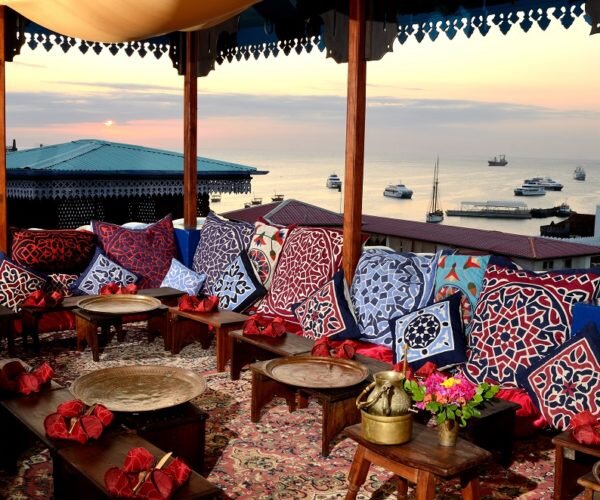
Drinking is not just for beach bars and rooftops - the local tea scene is a great way to meet people that live on the islands. Most tea stands or carts start serving once the sun has gone down so be sure to try the tangawizi (ginger) chai and, if possible, add vanilla. Taking a mug of hot and spicy tea to the side of a road is a fun way to people watch. If you’re in Stone Town, ask for the nearest Babu Chai, and someone should be able to point you in the right direction.
Taraab music, from Arabic tariba (‘to be moved’), blends African, Arabic and Indian influences. Typically, a Taraab orchestra combines Western and traditional local instruments, including an accordian, a violin, a kanun, a nay and drums, plus a singer. You’ll find these groups playing at different venues around Stone Town.


NIGHTLIFE IN ZANZIBAR
When you first arrive, Stone Town can seem scary at night. The dimly-lit narrow streets and back alleys aren’t really inviting to people prone to aimless wandering. But don’t let the travel advisories for extra caution after nightfall keep you in your room. Stone Town’s nightlife is bustling, with kids playing, couples strolling, and people feasting everywhere. The centrally located night market, Forodhani Gardens, is jam packed with locals and tourists tasting the many fresh food stalls. Avoid the skewers of shellfish, which may have been sitting out in the sun all day, and instead go for grilled Indian spiced chicken and Zanzibar pizza with fresh sugar cane juice.
DIVING AND OTHER WATER SPORTS
Tanzania is known for its amazing safaris, but Zanzibar is not the Serengeti. Here, the wildlife is all underwater. With reefs surrounding the islands, Zanzibar is a prime destination for diving. The water temperatures are warm, visibility is typically excellent, the currents are weak and there’s a great abundance of colorful fish, all of which makes for an ideal location for beginner divers. On the North and East coasts, many of the larger resorts have professionally-run dive shops on-site. Please note that qualified divers must produce their certification and a log book.
If you make it to the islands, try and visit one of the many centers offering scuba diving training courses, and views of the coral and Indian Ocean life. But please take note that overfishing and lack of environmental oversight have damaged many of Zanzibar’s best reefs. Some of the best snorkeling can be found on Chumbe Island, a protected marine park about a ten-minute drive and 45-minute boat ride out of Stone Town.
If you’re not interested in diving you can go sailing on a dhow cruise, or try your hand at kayaking, snorkeling, waterskiing, windsurfing, parasailing, jet-skiing, kiteboarding and other water activities.


WEATHER IN ZANZIBAR
Just like the mainland, Zanzibar has two rainy seasons. Every year, there are the long rains and the short rains. On the heels of the hot East African summer, Zanzibar’s long rainy season lasts roughly from March until May. Booking a trip during this period if you’re set on a beach holiday will give you less tourists but you will very likely experience some rain. The short rains generally take place between November and December, but aren’t nearly as intense—they tend to show up in short and torrential bursts, then quickly fade back to blue skies.
WHERE TO STAY IN ZANZIBAR
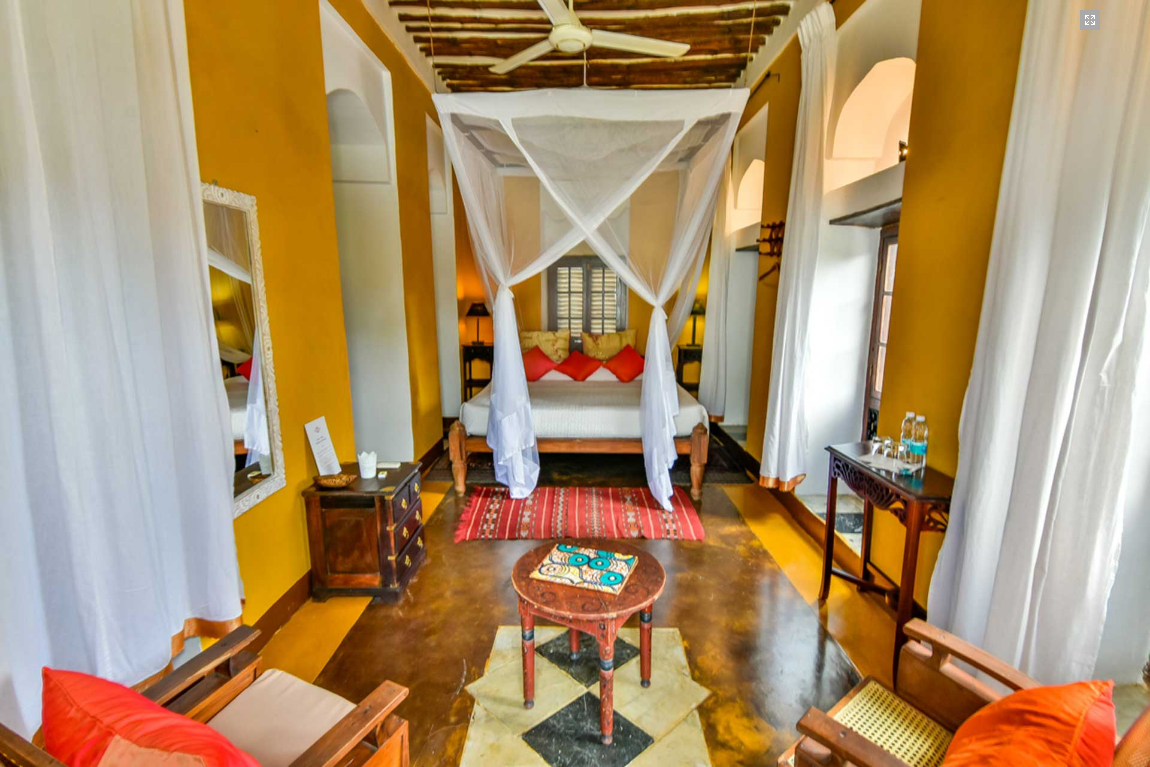
Zanzibar has a handful of East Africa’s most luxurious resorts, which can be a bit jarring in contrast to what is an otherwise quiet and poor island (the average local earns less than $1 a day). If you’re looking for a beach escape with other Westerners, you should head north to Nungwi and Kendwa, where you’ll find the same all-inclusive packages you’d find in most other warm parts of the world. It is a busy area with a bustling nightlife. For a more Zanzibari experience, check out quieter towns like Paje or Jambiani where the rhythms of village life will mix with your slice of island paradise.



5 RANDOM FACTS ABOUT ZANZIBAR:
- Zanzibar is not a single island; it’s a group of islands just off the coast of East Africa. The two large main islands are Pemba and Unguja. Unguja is sometimes incorrectly referred to as “Zanzibar”.
- The Anglo-Zanzibar War between the Zanzibar Sultanate and the United Kingdom on August 27, 1896 lasted only 38 to 45 minutes before there was a ceasefire. This makes it the shortest war in history.
- The lead singer of Queen, Freddie Mercury, was born in Zanzibar in 1946. His birth name was Farouk Bulsara.
- In 1973 Zanzibar was the first country in Africa to have color television.
- Zanzibar is called The Spice Islands because its main economic activity, after tourism, is spice exports – primarily, nutmeg, cloves, cinnamon and black pepper.


